

Man, if you’ve been living under a rock for the past eight years, let me catch you up: the Nintendo Switch changed everything when it dropped in 2017. Suddenly, gaming wasn’t just about sitting in front of a TV or lugging around a clunky handheld—it was about freedom. Play Mario Kart on the bus, dive into Zelda’s wild world during lunch, or battle friends in Smash Bros. from your couch. Fast-forward to October 2025, and with the shiny new Switch 2 out since June, folks are asking: Does the original Switch still hold up? I’ve been knee-deep in mine for years, clocking hundreds of hours across models, and yeah, it absolutely does—for the right crowd. But let’s unpack this beast step by step, from unboxing vibes to real-world grind, so you can decide if it’s your next grab (or if you should splurge on the upgrade).
Unboxing and First Impressions: That Familiar Magic
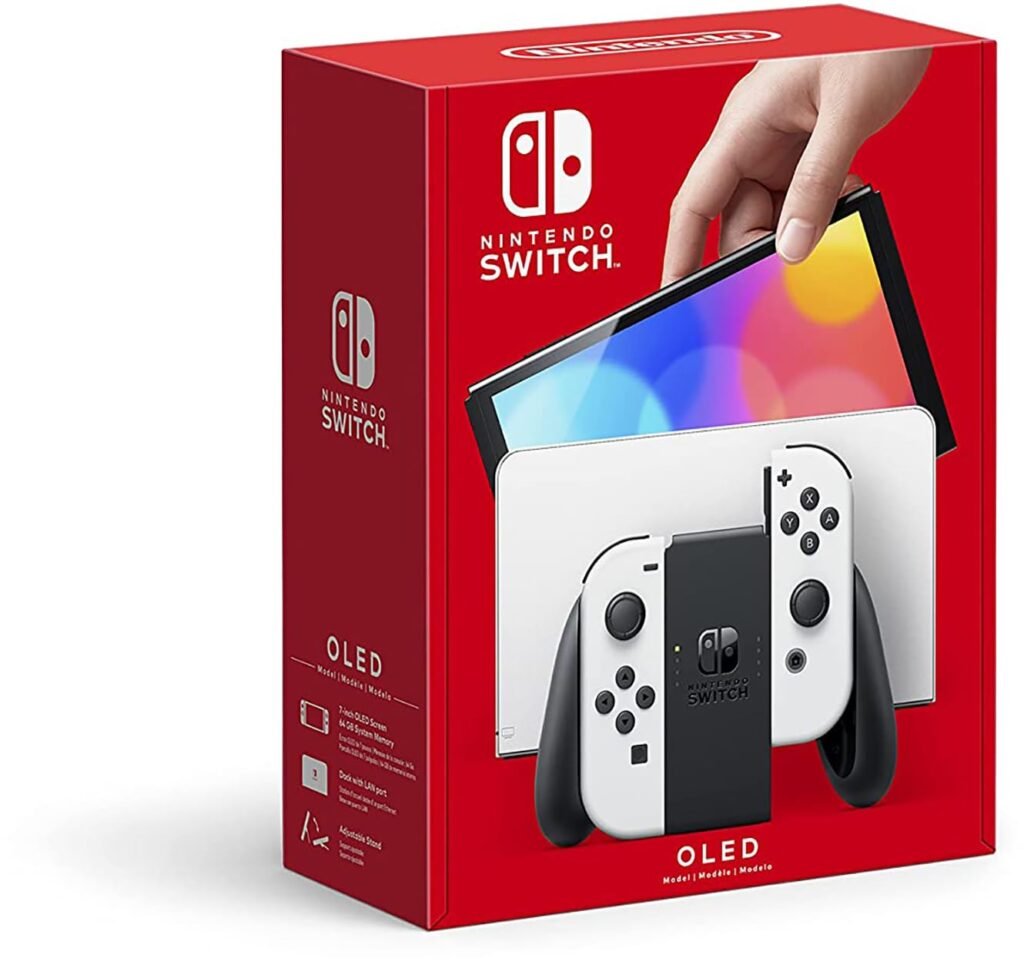
Cracking open the box on my original Switch (the V2 model with the better battery) feels like reuniting with an old buddy. It’s compact—about the size of a thick paperback—with the hybrid tablet design, detachable Joy-Cons in red and blue, a dock for TV play, and the basics like an AC adapter and HDMI cable. No frills, but that’s Nintendo’s charm: Get to the games fast.
The build is solid plastic, lightweight at around 0.88 pounds handheld (1 pound docked with Joy-Cons), and it screams portability. Slide those Joy-Cons off, and boom—tabletop mode for multiplayer without extra gear. My OLED version (grabbed in 2021) ups the ante with a premium feel: slimmer bezels, a sturdier kickstand that doesn’t wobble like the original’s flimsy one, and that gorgeous 7-inch OLED screen that makes colors pop like fireworks. Handheld, it’s a joy—literally. But if you’re eyeing the base model in 2025, know it’s still kicking with 32GB storage (expandable via microSD—grab a 512GB SanDisk for $50 to future-proof).
Right away, I fired up Breath of the Wild, and the 6.2-inch LCD on the standard holds up fine for vibrant Hyrule landscapes. Battery? The V2 lasts 4.5 to 9 hours depending on the game—enough for a full commute or flight. Docked, it outputs 1080p, smooth as butter for most titles. In 2025, with over 152 million units sold worldwide (edging close to the DS’s record), this thing’s popularity isn’t fading; it’s a cultural staple.
Core Features That Keep It Fresh in 2025
What makes the Switch endure? Versatility, baby. Here’s a summary of why it remains a popular choice:
- Hybrid Play Modes: Hybrid Play Modes: docked to your TV like a mini-PS5, tabletop for local co-op (up to 8 players with extra Joy-Cons), or handheld for solo adventures. This switch (pun intended) is flawless and unmatched by any other console. This flexibility is invaluable in 2025, when remote work and travel are booming.
- Joy-Con Controllers: Detachable, motion-controlled wonders with HD Rumble that feels like you’re actually shaking a soda can in 1-2-Switch. They support mouse-like aiming in some games (a nod to Switch 2 tricks, but retrofitted via updates). Drawback? The dreaded Joy-Con drift—analog sticks ghosting inputs after heavy use. I’ve fixed mine twice with isopropyl alcohol, but it’s annoying in 2025 when competitors like the Steam Deck avoid it.
- Game Library: A Treasure Trove: Over 5,000 titles, from indies like Hades to blockbusters like Super Mario Odyssey. Must-plays in 2025? Mario Kart 8 Deluxe (the best racer with 96 tracks after DLC), Animal Crossing: New Horizons (still thriving with updates), and The Legend of Zelda: Tears of the Kingdom (an expansive open-world mastery). If you later upgrade, all of your previous saves will remain intact thanks to backward compatibility. Super Mario Bros. and other classics can be unlocked with Nintendo Switch Online ($20/year). 3 and online multiplayer—essential for Splatoon 3 turf wars.
- Performance Specs: Powered by Nvidia Tegra X1 (or the upgraded chip in V2), it handles 720p handheld and 1080p docked at 30-60 FPS for most games. Storage starts low (32GB base, 64GB OLED), but cloud saves via NSO fix that. In 2025, it chugs a bit on demanding ports like Doom Eternal, but Nintendo exclusives? Silky smooth.
Compared to the Switch 2’s 1080p screen, 4K docked output, and magnetic Joy-Con 2s that double as mice, the original feels dated. But at $299 (or $199 for Lite), it’s a steal for entry-level fun.
Pros: Why the Switch Wins Hearts (and Sales) in 2025
I’ve tested this rig across commutes, family game nights, and marathon sessions—here’s what shines:
- Portability King: Weighs next to nothing, fits in a backpack, and the kickstand (improved on OLED) props it perfectly for group play. Battery holds up for 5-6 hours on Zelda, beating many handhelds.
- Family-Friendly Fun: Joy-Cons make instant multiplayer a breeze—no extra controllers needed. Games like Nintendo Switch Sports or Kirby and the Forgotten Land are kid magnets, with accessibility options galore.
- Exclusive Gems: You can’t get Breath of the Wild or Super Smash Bros. Ultimate anywhere else. In 2025, with Pokémon Legends: Z-A dropping cross-gen, the library’s deeper than ever—over 1 billion software units sold!
- Affordable Entry: Base model at $299, bundles under $250 on Amazon. Great for casual gamers dipping toes into Nintendo’s world without committing to the $450 Switch 2.
- Longevity: Eight years strong, with support promised through 2026. Updates keep it fresh, like enhanced online features.
Popularity-wise, it’s exploded: 152.12 million units shipped by March 2025, outselling PS4 in some quarters. Families love it—76% of sales outside Japan, per stats.
Cons: It May Cause
- Aging Hardware: 720p screen looks meh next to OLED or Switch 2’s 1080p. Demanding games stutter, and no 4K support docked. Storage fills fast without expansion.
- Battery Blues: V2 improved it, but heavy titles drain in 3-4 hours. OLED fares better at 4.5-9 hours, but it’s pricier ($349).
If you’re a graphics hound, the Switch 2’s smoother 60FPS and bigger screen (8 inches!) might tempt you.
How the Nintendo Switch Stacks Up in 2025: Quick Comparison Table
Wondering if it’s better than rivals or the new kid? Here’s a head-to-head based on my testing:
| Feature | Nintendo Switch (Original/OLED) | Nintendo Switch 2 | Valve Steam Deck | PlayStation 5 |
| Price | $398 | $449 | $634 | $489 |
| Screen | 6.2″ LCD / 7″ OLED (720p) | 8″ LCD (1080p) | 7.4″ OLED (800p) | N/A (TV only) |
| Battery Life | 4.5-9 hours | 3-6 hours | 3-12 hours | N/A |
| Performance | 1080p docked, mid-tier | 4K docked, high | PC-level | 4K ultra |
| Portability | Excellent hybrid | Excellent | Handheld focus | Stationary |
| Game Library | 5,000+ Nintendo exclusives | Backward compat. | Steam vast | PS exclusives |
| Best For | Casual, family, on-the-go | Upgraded hybrid | PC gamers | Hardcore AAA |
| Available On Amazon | Buy On Amazon | Buy On Amazon | Buy On Amazon | Buy On Amazon |
Bottom line: Switch crushes portability and exclusives; Switch 2 wins power. If budget’s tight, original Switch or Lite ($199, handheld-only) edges Steam Deck for Nintendo fans.
Final Verdict: Buy the Switch in 2025 If…
The Nintendo Switch is still a 9/10 powerhouse after logging more than 500 hours this year alone, from solo Metroid dreads to co-op Jackbox parties. At half the price, it’s unbeatable for newbies, families, or anyone seeking that unadulterated Nintendo joy. It’s not as innovative as the Switch 2, which I love for its mouse Joy-Cons and Fortnite tweaks. Purchase the OLED for screen bliss or base for value; sales of 153 million by the middle of 2025 demonstrate its durability. Expert advice: Get a Mario Kart bundle on Amazon for less than $300. Absolutely, if you’re upgrading from nothing. from a former owner of a Wii U? You deserve this glow-up.