Cleaning the leaves is a tedious task. This is especially true when the entire garden is covered by a large amount of water. You need a reliable rake to clear up this awkward fallen leaf, jump in and play, and then collect the mountain of fallen leaves again.
Choosing the best rake for falling leaves requires more than simply buying the first one you find online. To make the choice easier, we actually tested the highly acclaimed rakes to see which one performs best.
To ensure the durability of these rakes, we thoroughly tested them on the lawn of New England, which grew so thick that they hesitated to work without gloves. After processing a pile of fallen leaves, pine needles, acorns, and pebbles, we liked the lightweight Truper Tru Tough 24-inch drop-leaf rake (available on Amazon) most because of its lightweight, reliable performance and ease of use.
An excellent rake keeps the garden beautiful and is an essential gardening tool that can be used for many years. For those who prefer metal, plastic or both rakes, we have carefully selected the best choices available on the market.
Best Rake Overall
Truper Tru Tough 24-inch Leaf Rake
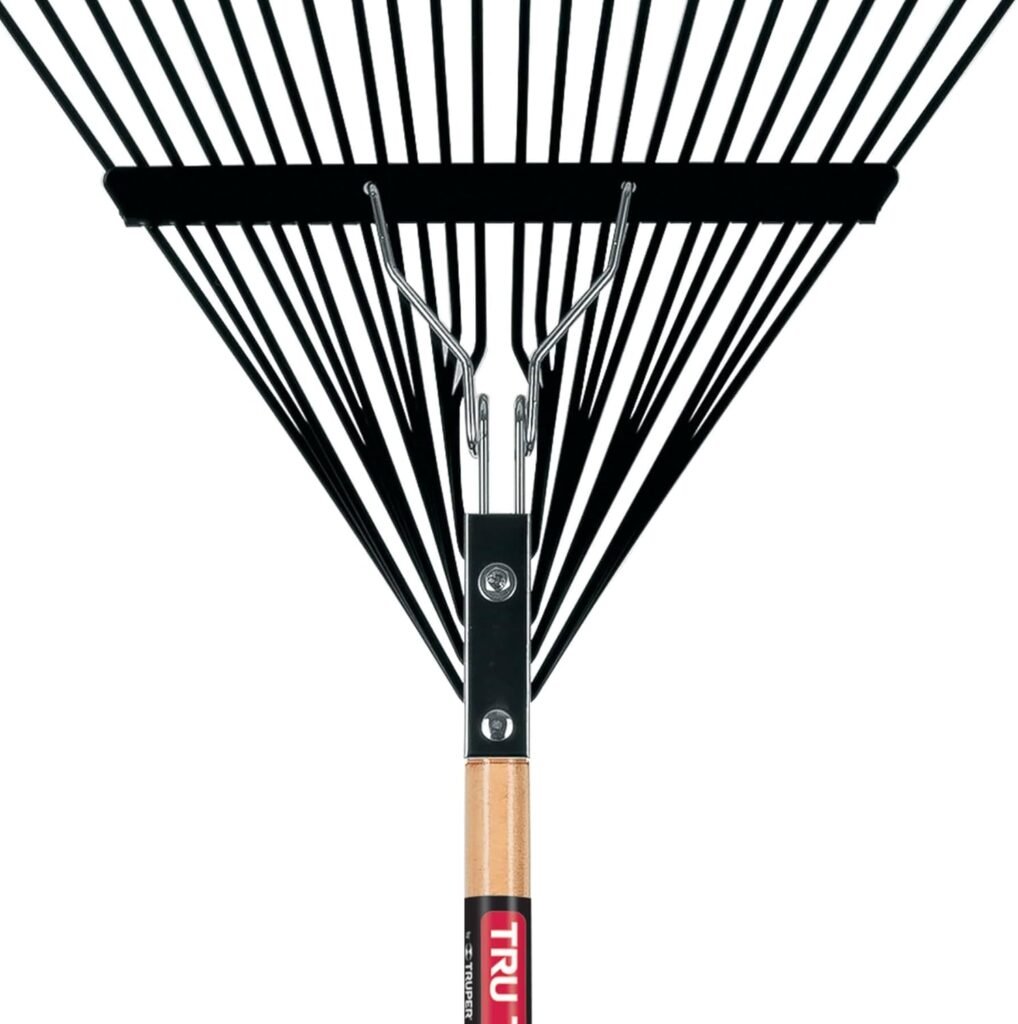
The True Part True Taffleflake combines easy-to-operate lightness with a weight that prevents the teeth from bouncing off the ground when pulled.
The sturdy metal teeth and weight allow this leaf flake to be scraped together very efficiently. Only a small portion of the leaves remain after one sweep. The test performed well on hard ground and slightly longer grassland. It does not collect all acorns and pine leaves, but the long handle makes it easier to handle and less tired even after a long work.
True-tough leaf scratching is not as wide as other products tested, but it is rather an advantage because it is supplemented by operability, scraping efficiency, and ease of storage due to the narrow horizontal cover range.
The leaf-cutter is fixed to the handle with two bolts, so the risk of damage or failure is extremely low. A slightly higher price is worth the extra cost. They are sturdy and do not break or damage teeth with repeated use.
Best Leaf Rake
Razor-Back 24-Tine Steel Rake
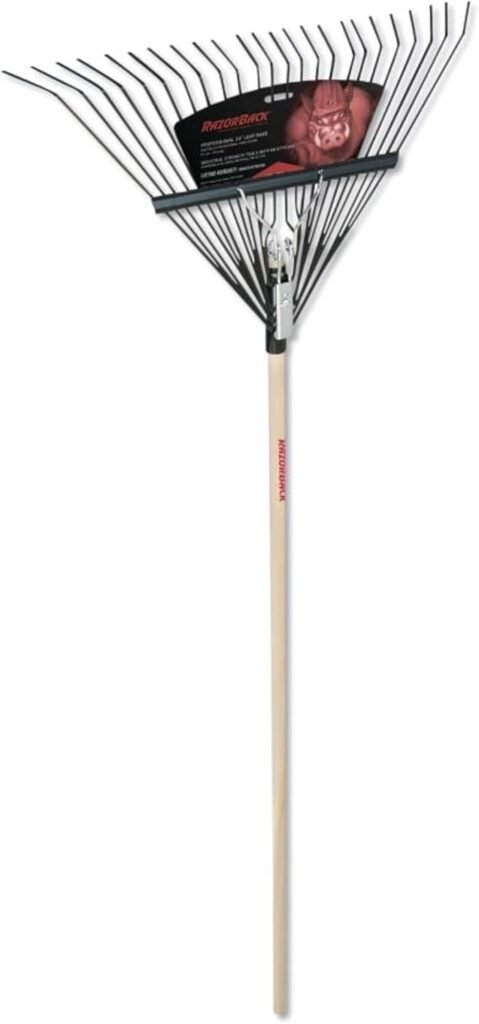
Razor back 24-tooth steel rake is identical in almost all respects to the Trooper True Tough 24-inch leaf rake, but differs in one respect: the short fiberglass handle. For those who have shorter arms or feel that the shorter handle is easier to use, the razor back is the best rake.
The 24-inch wide rake head of the razor back was very good at scratching fallen leaves. It is comfortable to hold, and it enters narrow places and uneven ground, making you feel a strong construction.
Best Rake For Pine Needles
Bully Tools 30-inch Lawn/Leaf Rake with Fiberglass Handle
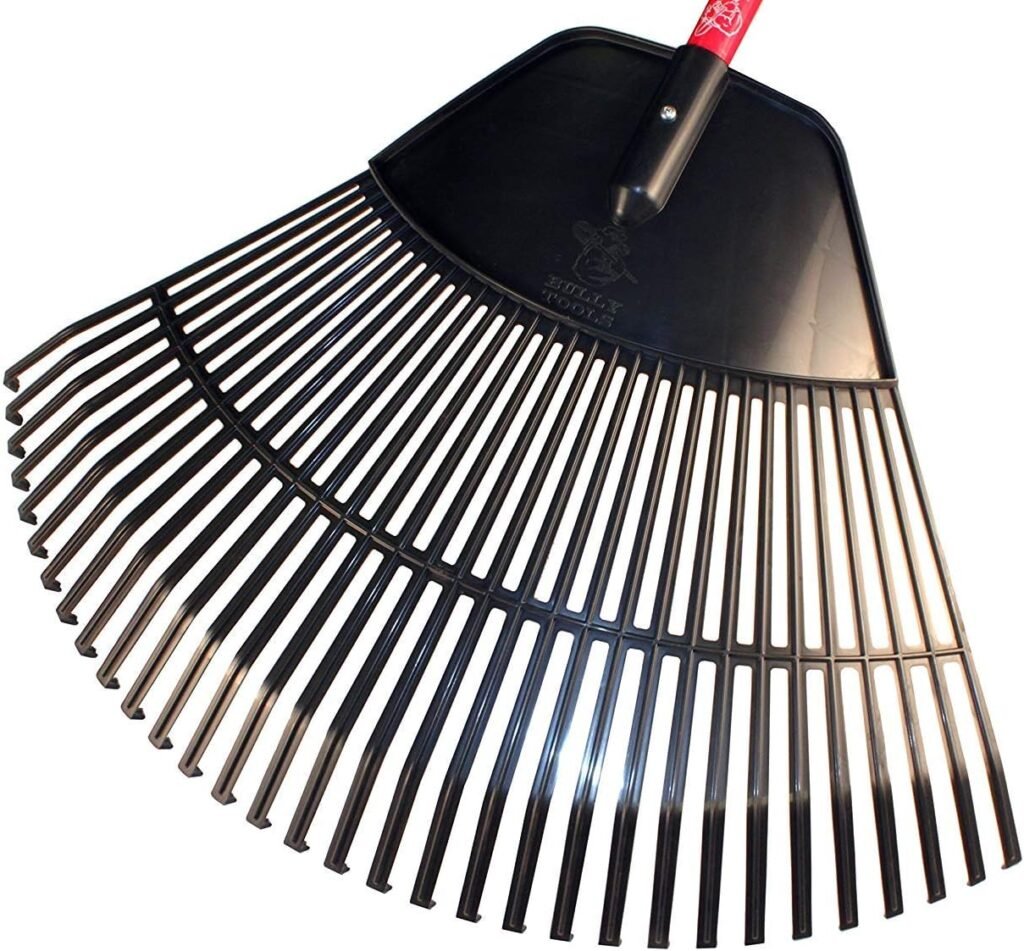
The rake of the Bully Tools has average scraping performance, is not difficult to operate and comes with a limited lifetime guarantee.
It weighs just over 3 lbs and is lightweight with plastic teeth and fiberglass handles. Efficiently catch garbage with a wide head. It is long among the rakes tested, so it may not be the best for those who are short.
The test performed well on flat ground, but caused some damage to the grass. With its wide head and sturdy teeth, it can recover almost all of the fallen leaves and dirt, making it a great choice for those who need to remove a large amount of pine needles.
One of the drawbacks is that the rake of Bully Tools is too capable of collecting fallen leaves and garbage, so it is easy to take things.
Best Premium Quality
GreatBuddy Adjustable Leaf Rake
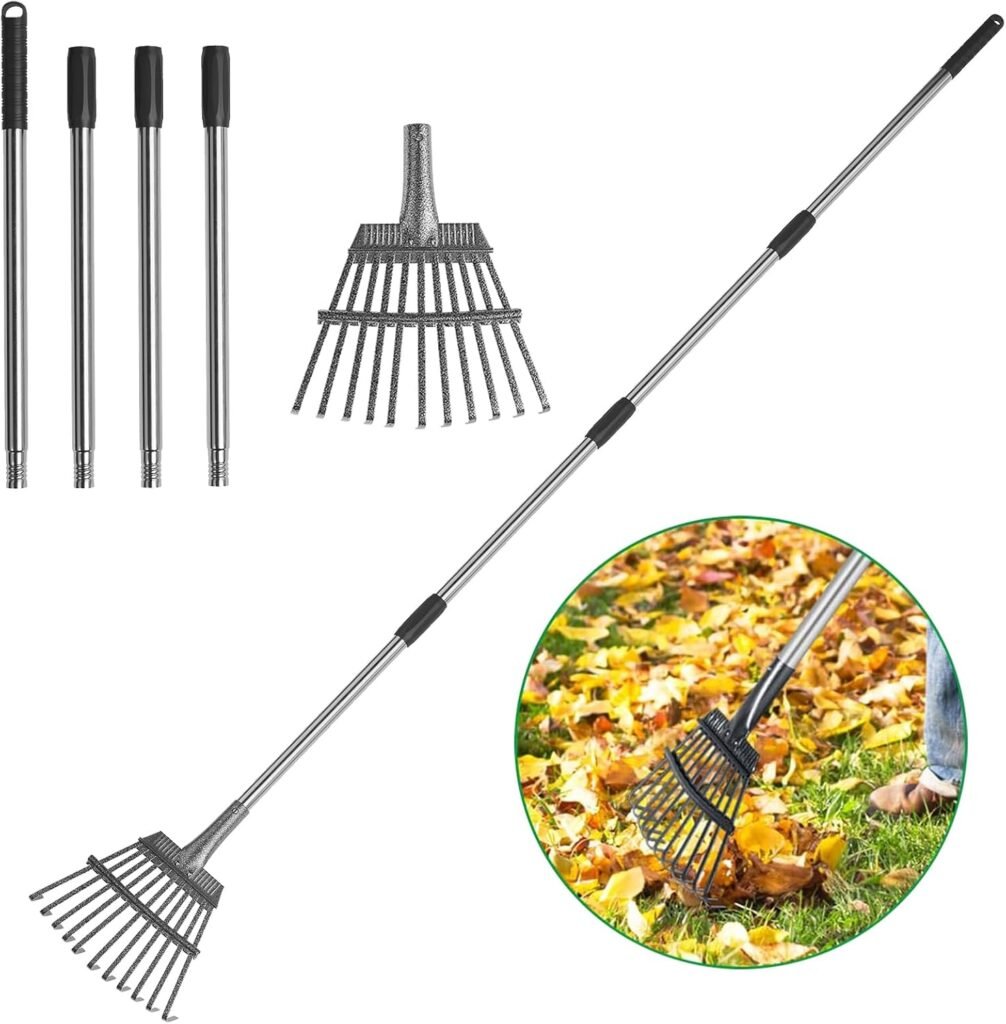
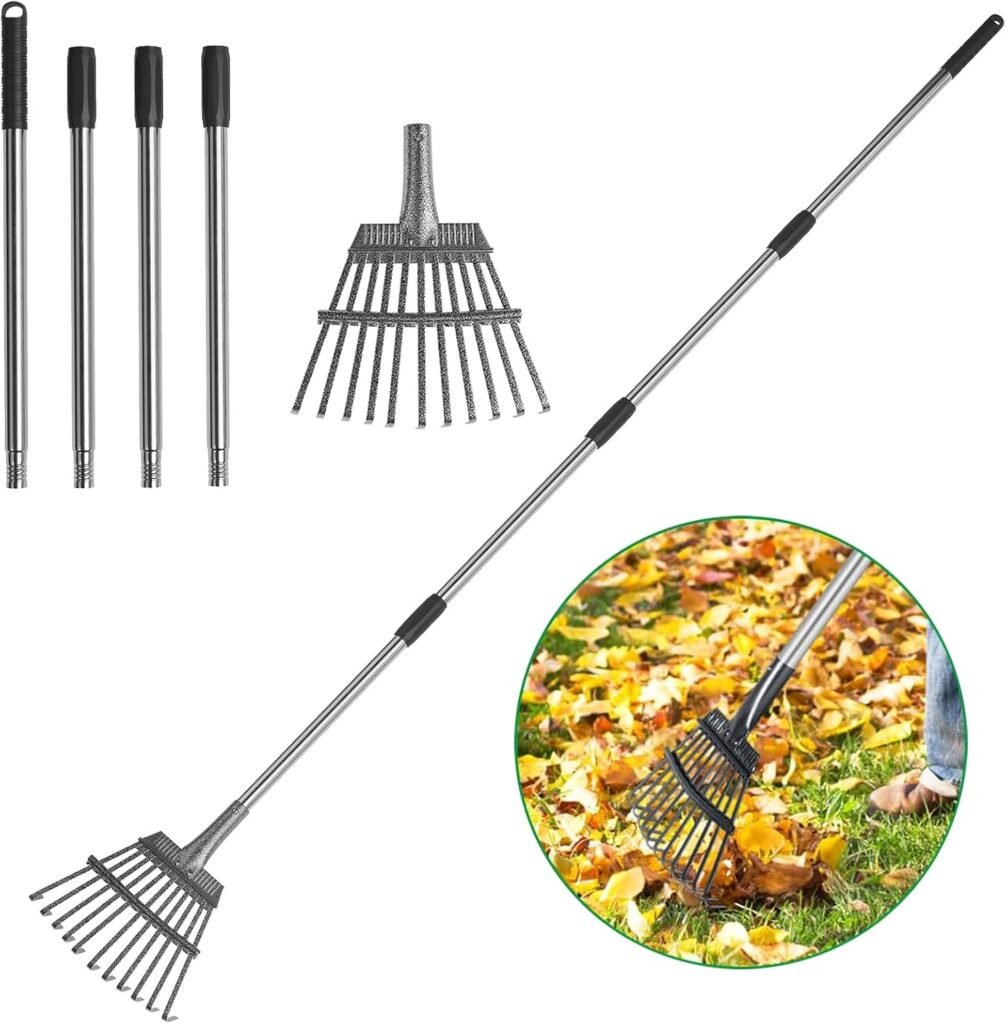
Small leaf scrubs with 11 metal teeth are ideal for cleaning fallen leaves in small places such as shrubs, flower beds, roofs, fence surroundings, etc.
The 1-inch diameter handle and sturdy metal head allow you to scrape dog excrement and clean blocks, rocks and other hard debris without damage.
Long life is achieved by adopting a stainless steel handle and aluminum-coated metal rake head. Simply screw the handle tube or insert it into the rake head, and the assembly is completed in a few minutes.
Other Rakes We Tested
Orientools 22 Tine Garden Rake
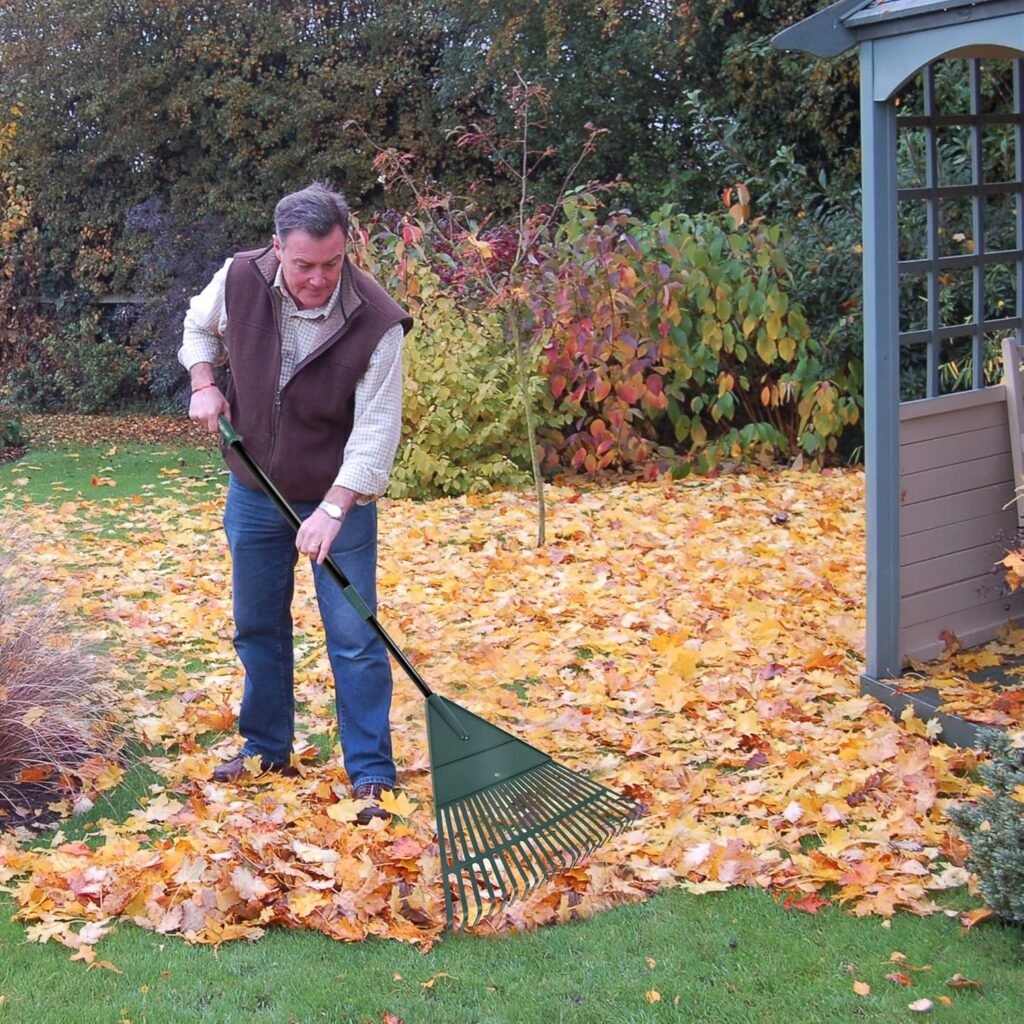
Orient Tools 22-Tooth Garden Lake is a standard 60-inch (approximately 152cm) long, robust product that is easy to use for people of all ages. It also comes with an adjustable handle, which is convenient for those who want to cover a wide range. Made of steel and plastic, it has a lightweight and compact design.
The Orient Tools rakes were also excellent, but they performed at best on flat or uneven terrain. The amount of garbage required for the work was picked up enough and almost never clogged. It was also easy to get rid of the garbage that was clogged up after the rake work. However, the structure was fragile and not very comfortable to use.
Jardineer 63” Adjustable Garden Rake

Theoretically, a rake that can be adjusted from 7 inches to 23 inches would be easy to use, but a Jardinian rake was not. Although it did not clog up, it was poorly performing on uneven and flat terrain, causing much damage to the grass and leaving garbage.
Also, the steel handle was not comfortable to use, and the design itself felt cheap. Overall, this rake is something to avoid unless you’re stuck in using a steel rake for your garden.
How to Choose the Best Rake
The best rake depends mainly on the type of landscape you want to prepare with the rake. Here are some things to consider before buying a new rake.
Lawn Depris
What kinds of fallen leaves are in the garden? leaves, acorns, twigs, pine needles, and other things that fall from trees. If you frequently process complex fallen leaves other than leaves, the type with a wide gap between the rake teeth is convenient. Doing so makes them less likely to become blocked by twigs and crutches.
On the other hand, if the distance between the teeth is too wide, it may escape the fallen leaves and cause the need to rake together the same place many times. Also, choose a rake that is labeled “for medium load” or “for heavy load”. The rake for light loads is ideal for processing only fallen leaves.
Topography
Is the garden relatively flat? Or are there slopes, hills, or depressions? Hard plastic rakes are suitable for cleaning fallen leaves on flat grass, but it is difficult to scrape up all the fallen leaves in grooves, depressions and hills. Metal rake teeth are flexible and easy to pull fallen leaves and other grass litter out of uneven surfaces.
Grass height
Is it the grass that is slightly above the ground, the grass that is completely covered by the grass, or the tall grass? Metal rakes are effective for all three of these types of grass, but if the ground is exposed, the sharp edges of metal rakes can leave scratches and grooves on the grass. In addition, tall grasses can get tangled in the gaps of metal teeth. Plastic rakes generally do not leave scratches on hard ground.
Material of handle
The handle of the rake is generally made of wood, but it may be easy to get tired if used for a long time. The fiberglass and metal handle are smooth and lightweight, and the grip on the tip of the handle is often attached, making it easy to hold the rake for the required time and comfortable to operate.
Handle Length
The long handle makes it easier to sweep away distant fallen leaves, but it may be difficult to handle for those who are short or have short arms. Make sure that you can use the rake naturally and that the back of your hand does not need to stretch too far to grasp the tip of the handle.
Experience has shown that when a rake is placed next to you, the tip of the handle should be long enough not to go above your height or below your chin. If it is too long, the arm that grabs the back side of the rake will be painful because it will always be stretched beyond the normal range of motion. If it is too short, you will frequently take a slouching position.
There are also rakes that can be adjusted in length with telescopic or removable segments. Take this Vivosoun rake for example. However, such models were not included in this test. As any engineer will tell you, the moving parts are the first ones to break. Therefore, this feature is not specifically recommended unless it is really necessary. People with short arms can be helped by reducing the grip.
Rake Head Width
The dimensions listed in the product name of the rake most often refer to the maximum width of the rake head, that is, the horizontal distance from the first rake teeth to the last rake teeth. This number is almost the same as the width of the grass that can be raked up in a sweep.
Most rake heads are about 24 inches wide (about 61cm). Normally, the width of the rake head and the size of the garbage you want to collect are in a trade-off relationship. The wider the head, the wider the distance between the teeth, creating room for small turf garbage to spill out from between the teeth. Narrow heads, on the contrary, are suitable for small garbage, otherwise they can quickly clog.
Some rakes (as well as this Vivosoun rake) can extend or contract the head width. It is a convenient feature, but the effect of rake depends on the interval between the teeth. If you narrow the width, you will also collect garbage other than fallen leaves.
Which is better, metal or plastic?
Metal and plastic rakes each have their own praiseworthy features. In general, metal rakes tend to be tougher than plastic, but they also weigh more. Plastic rakes tend to be cheaper and lighter, especially for wide rake heads that can cover a wide range at once.
Durability should also be considered. If a metal tooth deforms, it can usually be rebent to the correct shape. On the other hand, plastic teeth break under excessive stress, and once broken, they cannot be repaired.
Frequently Asked Questions
In many areas, the annual event after the trees have dropped their leaves, the leaf clearing, can be a more enjoyable activity. Using the right rake for leaf rake will speed up the process and reduce the amount of work involved. If you are not familiar with how to choose a rake for rake leaves, there may be some doubts. Below are answers to frequently asked questions about these tools.
Is it good for the grass?
Scattered small amounts of fallen leaves are fine, but thick, piled-up fall leaves in the fall can become damp and heavy, blocking the circulation of sunlight and air to the lawn, and increasing the risk of mold disease. Scraping together fallen leaves can remove excess cover that can damage the lawn.
What is the length of the rake for fallen leaves?
Some hand-held (for high-floor flower beds) are as short as 15 inches (about 38cm), but full-size rakes for fallen leaves can be as long as 72 inches (about 183cm) or more.
Which is better, a metal rake or a plastic rake?
Both metal and plastic can improve the efficiency of leaf scraping, but metal usually lasts longer. However, the new material polyresin, which is often used in modern plastic rakes, is more durable than conventional plastic.
How do you handle the collected leaves?
Fallen leaves can be mixed with compost or spread at the roots of trees and plants to protect against the cold in winter. Alternatively, bag them and contact your local waste disposal facility to request a roadside recovery.
Which is better, to sweep with a rake or blow with a leaf blower?
It’s not that either method is “better”, it’s just up to your needs. It certainly takes less time to clean the garden with a leaf blower than sweeping it with a rake. However, it is quieter to sweep with rakes (in some areas there is an ordinance on the use of leaf blowers), and it is environmentally friendly.
Should I wash my hands while they are wet?
It is better to sweep the fallen leaves dry. If it is dry, it is light and easy to lift, it does not stick, and it is difficult to mold even if it is piled up.
Should I wear a mask when sweeping leaves?
Wearing a mask when sweeping fallen leaves will protect yourself from dust and mold spores. If you have seasonal allergies, masks can help reduce the likelihood that your symptoms will be triggered.
Where should rakes be stored when not in use?
To keep the rake in good condition, store it in a cool and dry place. It is best stored indoors and hung away from the ground.